GTA 6: 5 Innovations That Will Change How You Play
Release date discourse is fun and all, but let's talk about the actual game. Because if even half of what's been reported is true, GTA 6 isn't just a bigger GTA 5 it's a fundamentally different way of playing. Here's what's actually changing.
1. The "Living World" Logic
The crowd technology in GTA 6 is doing something new.
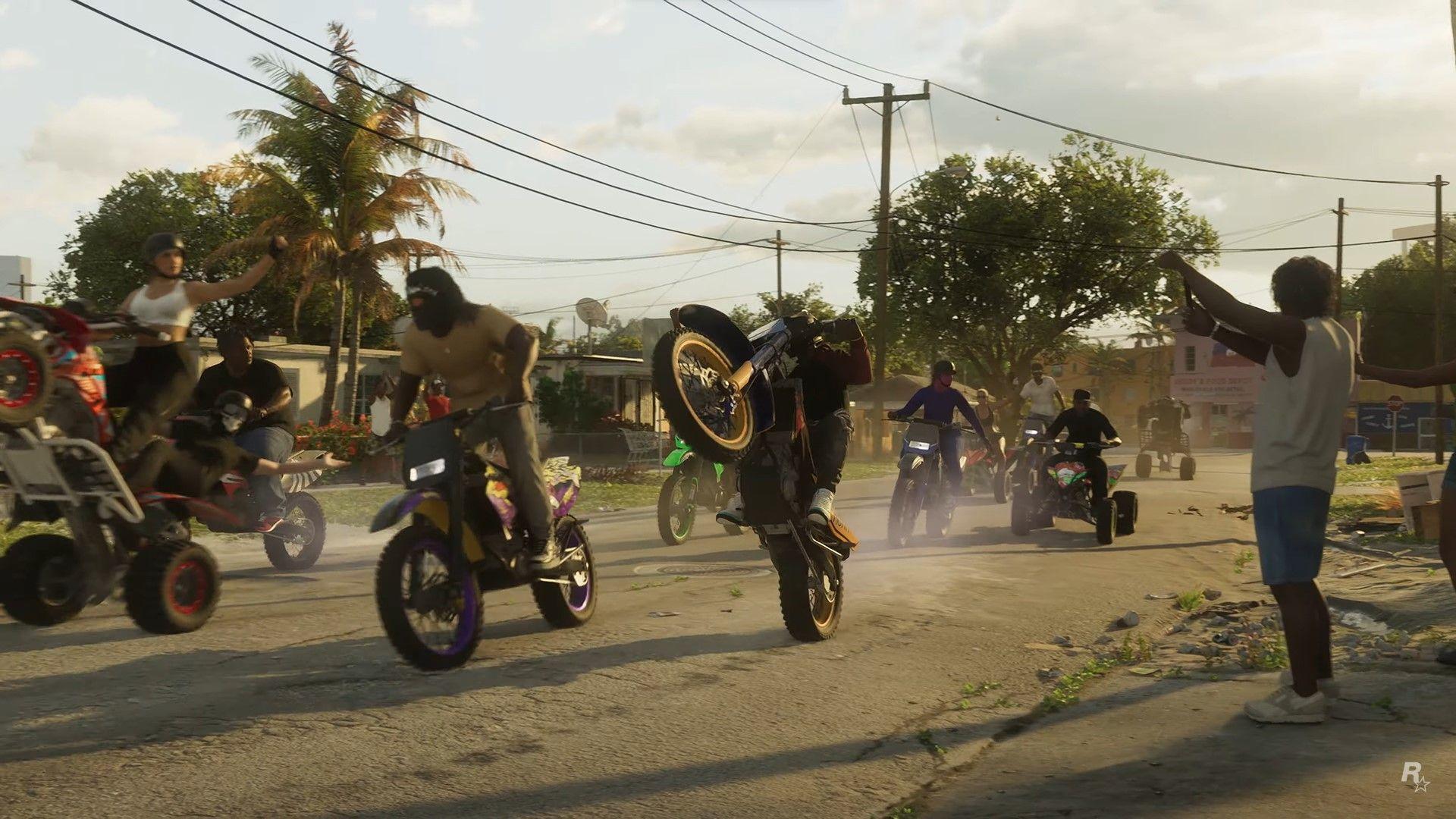
GTA 5 could push roughly 15–20 NPCs on screen at a time. The Vice Beach sequences in the trailers suggest we're looking at potentially hundreds simultaneously each with distinct behavior loops. NPCs filming incidents on their phones, taking selfies near chaos you just caused, reacting to what you're wearing. The world doesn't just exist around you anymore. It notices you.
This isn't cosmetic. When a crowd has social media behaviors baked into its AI, your actions have an audience within the fiction. That changes how crime feels and how the world responds to it.
700+ enterable interiors might be the quietest revolution in the game.
In previous GTA titles, about 90% of buildings are glorified wall textures. Reports around GTA 6 point to a massive shift malls, skyscrapers with functional lifts, seedy motels you can actually check into. When a city has real depth behind its facades, it stops feeling like a movie set and starts feeling like a place. That's the difference between a sandbox and a world.
2. The Jason & Lucia Trust System
This isn't just "press left on the D-pad to swap characters."
The dual protagonist system in GTA 6 reportedly goes beyond switching. During free-roam, your AI partner actively supports you in real time covering angles during a shop robbery, repositioning without a scripted trigger, making decisions. It's the difference between a co-op mechanic and a relationship mechanic. Your partner behaves like someone who's invested.
The loyalty system could define your ending.
Rumours point to a mechanic similar to RDR2's honour system except applied to the relationship between Jason and Lucia. The choices you make as either character may shift a "loyalty bar" that determines whether you get a ride-or-die ending or a betrayal ending. If true, this turns every morally grey decision in the game into something with emotional weight rather than just narrative flavour.
3. The Leonida Map It's Not Just Big
Six distinct biomes, and size is the least interesting thing about them.
The map is estimated at roughly 2.5 to 3.5 times the size of Los Santos. But raw scale is the wrong metric. What matters is density how much is actually happening per square mile. Here's the breakdown:
Vice City the neon-soaked urban core. Everything loud and bright and dangerous that you'd expect, cranked up.
Grassrivers the swampy Everglades equivalent. Gator territory. Low-riding cars will struggle here, which means vehicle choice suddenly has environmental stakes.
The Leonida Keys an archipelago designed for exactly the kind of high-speed boat chases and underwater diving that GTA 5 only teased. Water gameplay finally has geography to match it.
Mount Kalaga a national park biome for off-road vehicles and, presumably, the kind of missions that have you hiking somewhere you absolutely shouldn't be.
Each biome isn't just a visual skin it creates different gameplay constraints. That's good map design.
4. Tactical Gameplay: Weight & Gear
Trunk storage is the most "this isn't GTA anymore" change in the game.
You can no longer carry a rocket launcher, three assault rifles, and a minigun in your jacket pocket. Heavy weapons live in your vehicle's trunk now, borrowing directly from RDR2's approach. Before you step out of the car, you're making loadout decisions. Do you bring the heavy artillery for what might happen, or travel light for what's likely? That's a new kind of thinking for a GTA game.
It sounds like a restriction. It plays like depth.
Prone movement and body dragging shift the whole combat register.
Leaked mechanics suggest a prone system and the ability to crawl or drag bodies. If accurate, this moves GTA 6 away from its arcade run-and-gun roots into something more tactical and deliberate. Clearing a building quietly becomes a viable option rather than an afterthought. The game stops rewarding chaos as the only strategy.
5. The "Connected" Universe
The in-game social media isn't just set dressing.
The TikTok-style clips in the trailers aren't cutscenes they appear to be part of a functioning in-game internet where your crimes can go viral in real time within the game world. More interestingly, reports suggest this same system will be how certain missions are discovered. You're not just reading a map marker — you're stumbling onto a viral video and deciding whether to get involved. That's mission design through the world's own logic.
The Bonnie & Clyde structure works because it's personal.
A duo outperforms a trio narratively for one simple reason every heist, every decision, every betrayal means something because there are only two people it can fall on. GTA 5's three-protagonist structure was impressive engineering. Jason and Lucia's dynamic is something tighter: two people making impossible choices together, where the emotional fallout lands directly on you as the player. That's the kind of story that sticks.
We know November 19 is the date. Now you know what's actually waiting on the other side of it.
The map isn't just big it's built differently. The characters aren't just switchable they're connected to you. And the world isn't just populated it's watching.